
Stainless Steel vs. Galvanized Steel Enclosures: A Baltimore Manufacturer’s Perspective
Material selection for electrical enclosures becomes interesting when comparing stainless steel and galvanized steel options. Both offer corrosion resistance, both cost significantly more than bare carbon steel, and both have passionate advocates who’ll argue their choice is superior. The reality is more nuanced, and the right answer depends entirely on your specific application and priorities.
We work with both materials daily at our Baltimore facility, and we’ve learned that the choice between stainless and galvanized involves trade-offs that extend beyond just cost. Understanding how each material achieves corrosion resistance helps explain why one might be better suited to your application than the other.
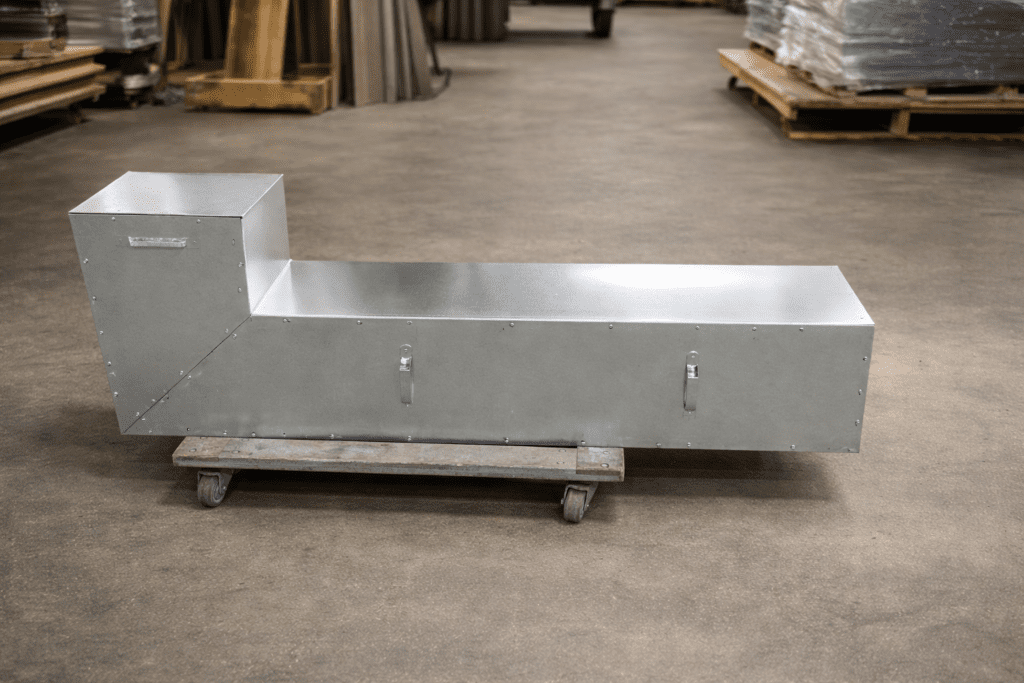
Galvanized steel starts as standard carbon steel that’s been coated with zinc through a hot-dip galvanizing process. The steel is immersed in molten zinc, which metallurgically bonds to the surface and creates a protective barrier between the base metal and the environment. This zinc coating provides what’s called “sacrificial protection” – the zinc corrodes preferentially to the steel beneath it, essentially sacrificing itself to protect the underlying metal. Even if the coating gets scratched or damaged, the zinc around the damaged area continues providing electrochemical protection to exposed steel.
Stainless steel, specifically 304 or 316 alloys for enclosure applications, takes a fundamentally different approach. The chromium content in stainless steel forms a passive oxide layer that self-heals when damaged. This isn’t a coating applied to the surface but rather an inherent property of the material itself. Scratch a stainless enclosure, and the exposed surface immediately develops a new protective layer when exposed to oxygen.
These different protection mechanisms create distinct performance characteristics in real-world conditions. Galvanized enclosures excel in atmospheric corrosion resistance, particularly in industrial and rural environments. We’ve seen galvanized electrical enclosures on Baltimore-area factory rooftops that have been in service for 30 years with minimal degradation. The zinc coating develops a stable patina over time – a subtle gray appearance that actually enhances protection rather than indicating deterioration.
The Mid-Atlantic climate treats galvanized steel reasonably well. Our humid summers and cold winters cause the zinc to slowly oxidize, but this process is measured in decades rather than years for quality hot-dip galvanizing. Where galvanized really proves its worth is in situations involving atmospheric moisture and industrial pollution. The zinc coating handles sulfur dioxide, carbon dioxide, and general atmospheric contamination better than many people realize.
However, galvanized steel has a weakness that’s particularly relevant for Baltimore-area coastal installations: chlorides. Salt – whether from ocean spray or winter road treatment – attacks zinc aggressively. Within five miles of the Chesapeake Bay or along heavily salted roadways, galvanized enclosures deteriorate noticeably faster than they would inland. The zinc coating still provides years of protection, but you might see white rust formation and coating degradation within 1 to 5 years rather than the 25 to 30 years you’d expect in a non-coastal environment.
This is where stainless steel’s different approach to corrosion resistance becomes valuable. Type 304 stainless performs well in normal atmospheric conditions and handles moderate chloride exposure without issues. Type 316 stainless, with its molybdenum addition, provides excellent resistance to chlorides and thrives in coastal environments. For Baltimore-area outdoor enclosures near the bay or subject to regular salt exposure, 316 stainless is necessary, and well worth the added cost.
The cost comparison between these materials reveals an interesting middle ground. Galvanized steel typically costs 40 to 60 percent more than bare carbon steel, while stainless runs two to three times the price of carbon steel. This positions galvanized as a cost-effective corrosion-resistant option that delivers significant protection without the full expense of stainless. For many applications, this price-performance balance makes galvanized the logical choice.
Fabrication considerations differ substantially between the two materials. Galvanized steel arrives at our shop already coated, which means cutting, drilling, and welding operations expose bare steel that requires touch-up galvanizing or zinc-rich paint. Welding galvanized presents particular challenges – the zinc vaporizes at welding temperatures, creating toxic fumes that demand excellent ventilation and sometimes forcing us to grind away the coating before welding and then recoat afterward. These extra steps add labor costs that partially offset the material savings compared to stainless.
Stainless steel fabricates more predictably. It requires different tooling and techniques than carbon steel, and it work-hardens during forming, but there’s no coating to worry about damaging or repairing. Welds in stainless maintain corrosion resistance without additional treatment, assuming proper techniques are used to prevent carbide precipitation. The fabrication labor premium for stainless versus galvanized runs about 10 to 15 percent in our experience, driven primarily by tool wear and the need for dedicated equipment to prevent cross-contamination.
Appearance considerations often influence material selection more than engineers like to admit. Galvanized enclosures have that distinctive spangled zinc appearance when new, which gradually weathers to uniform dull gray. Some facilities appreciate this industrial aesthetic; others find it unappealing. Galvanized enclosures can be powder-coated or painted to achieve any desired appearance, though this adds cost and somewhat defeats the purpose of choosing a corrosion-resistant material in the first place.
Stainless steel maintains its appearance indefinitely with minimal maintenance. The bright metallic finish looks professional and modern, and it stays that way year after year. For customer-facing installations, corporate campuses, or facilities where appearance reflects on the company’s commitment to quality, stainless delivers consistent visual impact. We’ve also noticed that facility managers sometimes view stainless enclosures as premium equipment worthy of better care, which can translate to longer service life through better maintenance practices.
Water and wastewater treatment facilities present an interesting case study in material selection. These environments combine moisture, occasional chemical exposure, and outdoor installation – conditions that might favor either material depending on specific details. We’ve fabricated both galvanized and stainless enclosures for treatment plants, and the choice often comes down to proximity to the coast and whether the enclosure will encounter chlorine or other treatment chemicals.
For a plant 20 miles inland with enclosures away from chemical feed areas, hot-dip galvanized provides excellent service life at reasonable cost. The same plant with enclosures near sodium hypochlorite tanks or in areas subject to chlorine gas exposure typically specs stainless to avoid accelerated zinc corrosion. Baltimore City’s wastewater treatment plants near the bay almost exclusively use stainless for critical electrical enclosures, having learned through experience that the marine environment demands the extra corrosion resistance.
Food processing facilities generally favor stainless steel for different reasons entirely. While galvanized provides adequate corrosion resistance for many food plant applications, the cleanability and non-porous nature of stainless make it preferable from a hygiene standpoint. Regulatory agencies look favorably on stainless installations, and the material’s resistance to acidic and alkaline cleaning chemicals ensures long service life despite aggressive washdown procedures.
We’ve found that hybrid approaches sometimes offer the best value. A galvanized enclosure body with a stainless steel door and latch assembly can reduce costs while providing superior corrosion resistance where it matters most. Doors receive more exposure, handling, and wear than the enclosure body, so protecting these high-contact areas with stainless extends service life without the full cost of an all-stainless design.
Temperature extremes affect both materials, though in different ways. Galvanized steel maintains its protective properties across a wide temperature range, though the zinc coating can become brittle in extreme cold. This rarely creates problems in the Baltimore area where winter temperatures seldom drop below zero for extended periods. Stainless steel performs consistently across temperature extremes, which matters more for specialized applications than typical electrical enclosures.
One often-overlooked advantage of galvanized enclosures is repairability. Damaged areas can be touched up with zinc-rich paint or cold galvanizing compounds, restoring protection without major intervention. Stainless repairs are more challenging – welded repairs work well if done properly, but surface damage generally remains visible even after refinishing. For facilities with limited budgets and good maintenance programs, galvanized’s forgiving nature can extend useful service life well beyond what the coating condition might suggest.
For Baltimore-area installations, our general guidance runs like this: choose hot-dip galvanized for outdoor installations more than five miles from the Chesapeake Bay, industrial environments without unusual chemical exposure, applications where initial cost is a significant constraint, and installations where the gray galvanized appearance is acceptable or where painting is planned anyway. Specify 304 stainless for coastal areas, installations subject to chemical exposure, food processing and pharmaceutical applications, and anywhere that appearance matters long-term. Use 316 stainless for direct coastal exposure within two miles of salt water, chemical processing environments, areas subject to regular chloride exposure from deicing operations, and any application where maximum corrosion resistance justifies the premium cost.
The material decision ultimately reflects your priorities around initial cost versus lifecycle value, environmental severity, and aesthetic requirements. Galvanized steel offers an attractive middle ground – better corrosion resistance than painted carbon steel without the full cost of stainless. Stainless steel provides maximum corrosion resistance and appearance retention for applications that justify the investment. Neither material is universally better, but understanding how each achieves corrosion protection helps identify which suits your specific situation.
The key is making an informed choice based on actual operating conditions, expected service life, and total lifecycle costs rather than defaulting to the lowest first cost or assuming that expensive materials are always better. That’s where working with an experienced fabricator who understands your industry and local environment pays dividends beyond the enclosure itself.
At J.M. Gillin, we fabricate enclosures in stainless steel, galvanized steel, and carbon steel daily, which means we have no bias toward pushing you toward the most expensive option. Our goal is helping you select the material that makes the most sense for your specific application, environment, and budget. We’ll ask about your installation location, exposure to salt or chemicals, expected service life, and appearance requirements, then recommend the material that delivers the best value over the long term. Whether that’s hot-dip galvanized for a cost-effective outdoor installation or 316 stainless for a demanding coastal environment, we’ll fabricate an enclosure that’s properly designed for the material’s characteristics and your application’s demands. If you’re uncertain which material is right for your next enclosure project, contact our team; we’ll discuss your specific conditions and provide honest guidance along with a detailed quote. Sometimes the answer is galvanized, sometimes it’s stainless, and sometimes it’s a hybrid approach, but we’ll make sure you understand the trade-offs before making your decision.