
5 Hidden Costs of Standard Enclosures (And When Custom Fabrication Saves Money)
When procurement teams evaluate electrical enclosures, the initial price tag naturally dominates the conversation. A standard catalog enclosure at $600 looks far more attractive than a custom-fabricated option at $1,100. But often the purchase price isn’t the true cost to deliver, and we’ve seen countless situations where custom fabrication delivers better value over the equipment’s lifetime.
The first hidden cost appears during installation. Standard enclosures come in predetermined sizes, so your equipment either fits perfectly or it doesn’t. More often than not, installers face a box that’s slightly too small, forcing them to mount components at odd angles, stack equipment vertically when horizontal mounting would be better, or eliminate heat dissipation space. The alternative is ordering the next size up, which solves the space problem but introduces another issue: wasted interior volume that still needs to be heated or cooled. Customers have told us repeatedly that their electricians must work around poorly sized standard enclosures, and those hours add up quickly.
Modification costs represent another significant expense that buyers frequently underestimate. Standard enclosures arrive with generic knockouts and mounting provisions, but actual applications demand specific cutouts for conduit entries, cable glands, viewing windows, ventilation louvers, and mounting hardware. Some facilities handle these modifications in-house, tying up skilled labor and shop equipment for what amounts to custom fabrication. Others send the enclosure to a machine shop, adding lead time and paying retail rates for work that could have been incorporated during the initial fabrication process. Either approach costs more than building it right the first time.
Then, there’s the matter of spare parts and component standardization. When you’re buying standard enclosures, you’re inheriting the manufacturer’s component choices for hinges, latches, gaskets, and hardware. Your maintenance team must stock multiple varieties of replacement parts across different enclosure models and manufacturers. Custom fabrication means the enclosure fits your job like a glove- it allows you to specify the exact hardware you already use throughout your facility, reducing inventory complexity and ensuring that spare parts are always available when needed.
Thermal management presents a hidden cost that often doesn’t surface until equipment starts failing prematurely. Standard enclosures are designed for generic applications, not your specific heat load and ambient conditions. Installing variable frequency drives, battery banks, or high-power electronics in a standard enclosure frequently requires adding cooling fans, vortex coolers, or air conditioning units after the fact. These retrofitted climate control systems rarely integrate elegantly, often requiring additional enclosure modifications and resulting in less efficient thermal management than a purpose-designed solution.
The fifth hidden cost involves future modifications and expansions. Facilities evolve, and electrical systems change with them. A standard enclosure selected for today’s requirements offers little flexibility when you need to add circuits, replace components with different form factors, or upgrade to new technology. Custom enclosures can be designed with expansion capacity, knockouts positioned for likely future modifications, and internal layouts that accommodate foreseeable changes.
So when does custom fabrication actually save money? Typically when any two of these conditions are met: your application requires three or more modifications to a standard enclosure, your installation and design are being sunk into over-engineering a solution, you’re installing multiple identical enclosures, you have specific thermal management requirements, or you anticipate equipment changes within five years.
The conversation shouldn’t be custom versus standard but rather about the total cost of getting the right enclosure for your application. Sometimes a standard enclosure truly is the most economical choice, particularly for simple applications with no special requirements and plenty of interior space. But when the application demands specific dimensions, multiple modifications, thermal management, or future flexibility, custom fabrication frequently delivers better value despite the higher initial price tag.
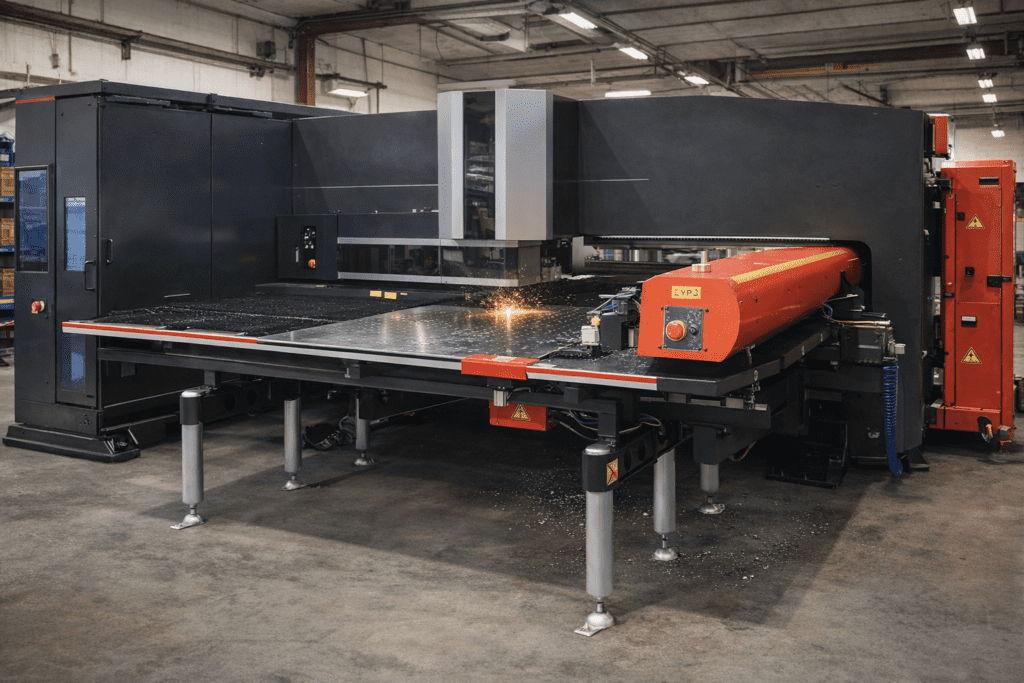
The key is having an honest conversation with your fabricator about your actual requirements, installation constraints, and long-term plans. A good fabricator can help you identify where standard solutions work well and where custom fabrication prevents costly compromises. After all, the cheapest enclosure you can buy is the one that does exactly what you need without forcing expensive workarounds or premature replacement.
At J.M Gillin, we’ve built our reputation on helping East coast companies avoid exactly these kinds of hidden costs. Before we quote any project, we take time to understand your installation constraints, thermal requirements, and future plans so we can design enclosures that eliminate expensive modifications and workarounds. Our fabrication process incorporates all the cutouts, mounting provisions, and features you need from day one. The result is an enclosure that installs faster, performs better, and costs less over its lifetime than a seemingly cheaper standard alternative. If you’re evaluating enclosure options for an upcoming project, reach out to our team – we’ll provide a free quote that includes custom engineering and our full attention. You might be surprised how competitive custom fabrication becomes when you factor in the complete picture.